ServicesPool Drain and Refill
Pool Drain and Refill in Gold Canyon
Pool water wears out. Minerals and stabilizer build up until chemicals stop doing their job. We drain the pool the safe way, clean it while it's empty, refill it and balance the new water so your surface and equipment last longer.
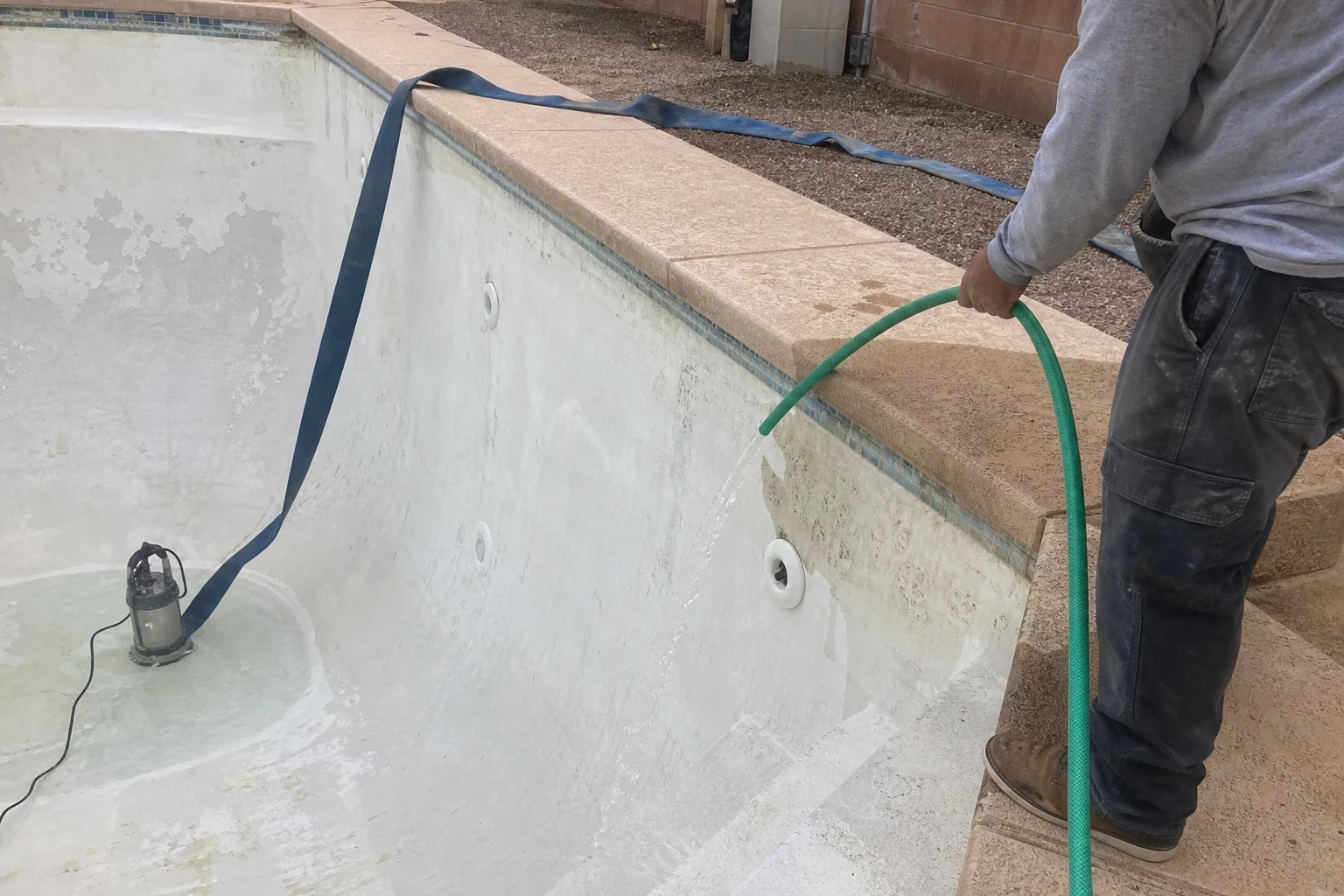
When old water needs to go
Every time water evaporates, the minerals stay behind. Add more water and you add more minerals. Over a few years the calcium, dissolved solids and stabilizer from chlorine tablets pile up. At that point you can pour in chemicals and still fight cloudy water, scale on the tile and a pH that won't hold.
Draining and refilling resets all of that. It's one of the plainest ways to protect your plaster and your equipment, because balanced water is less likely to etch the surface or coat the heater and pump with scale. We test first and tell you straight if a drain is worth it or if your water still has life left.
What the job covers
Water testing before we start
We check calcium hardness, cyanuric acid and total dissolved solids. The numbers tell us if a full drain makes sense or if a partial drain will do.
Safe pump-out
We use a submersible pump and route the water to the sewer cleanout at your home where local rules call for it. We don't run it down the street.
Cleaning the empty shell
With the water gone, we clear debris from the floor and main drain and rinse the walls. If the surface needs more, we can do an acid wash or calcium removal and tile cleaning while it's empty.
A close look at what's underwater
An empty pool shows things you can't see through water. We look at the plaster, tile line, light niche and drain covers and photograph anything worth knowing about.
Refill and start-up balancing
We refill from your hose and bring the new water into balance step by step. That means alkalinity, pH, calcium and a measured dose of stabilizer, then chlorine.
Signs your water is past its prime
Chlorine stops working
You add chlorine and the reading barely moves, or algae shows up anyway. High stabilizer from tablets is often the cause, and only fresh water brings it down.
White crust that keeps coming back
Scale on the tile line or a gritty feel on the plaster points to calcium that's too high. Brushing won't fix the water behind it.
Cloudy water with good readings
When pH and chlorine look fine but the water stays dull, dissolved solids may be maxed out.
It's been years since the last drain
Our hard tap water and high evaporation load minerals fast. If you can't remember the last drain, it's worth a test.
Planned surface work
An acid wash, a repair below the waterline or new tile all need an empty pool. Pairing them with a drain saves you a second round.
How a drain and refill day goes
- 1
Test and plan
We test your water, look at the pool and pick a day. Cooler months are best, since summer sun can crack or lift plaster that's sitting dry.
- 2
Pump out
We shut off the equipment and set the pump. Draining usually takes most of a day depending on pool size, and we keep an eye on it the whole time.
- 3
Clean and inspect
Once it's empty we clean the shell, check the surface and walk you through anything we found. We don't leave a pool sitting empty longer than it needs to be.
- 4
Refill
We start the refill right away so the plaster isn't exposed. Filling from a hose often runs overnight.
- 5
Balance and restart
We restart the pump and filter, check for air in the lines and balance the new water. Then you're back to swimming.
What moves the price
Most drain and refill jobs follow the same steps, so the price comes down to the size of the pool and what else needs doing while it's empty. We give you the number by phone or after a quick look, with any add-ons listed separately so nothing shows up later.
- Pool size
- More gallons means a longer pump-out and a longer refill. It also takes more chemicals to balance the fresh water.
- Where the water goes
- A sewer cleanout close to the pool is simple. A long hose run or a hard-to-reach cleanout adds time.
- Extra work while it's empty
- An acid wash, calcium removal or a repair below the waterline adds to the job, but costs less than draining twice.
- Condition of the water
- A pool that has gone green may need extra cleaning of the floor and drain before refill.
Drain and refill questions
Something not covered here? (480) 534-9618
How often should a pool be drained?
It depends on how much the water has built up, not the calendar. Pools that use chlorine tablets and get lots of evaporation build up faster. We test the water and tell you if it's time or if it can wait.
Can draining damage my pool?
It can if it's done carelessly. Groundwater pressure can push on an empty shell, and hot sun can crack dry plaster. We check the relief valve, drain in cooler weather and refill right away to keep the risk low.
Who pays for the water?
The refill runs from your hose, so it shows up on your home's water bill. We'll give you a rough idea of the volume ahead of time so it's not a surprise.
Can I swim the same day?
Usually not. The pool needs to fill and the new water needs to be balanced first. Most pools are ready within a day or two of the refill.
Should I get an acid wash at the same time?
If your plaster is stained or crusted, yes. It's the one time the surface is bare, so it's the cheapest moment to clean it. If the surface looks fine, we'll say so and skip it.
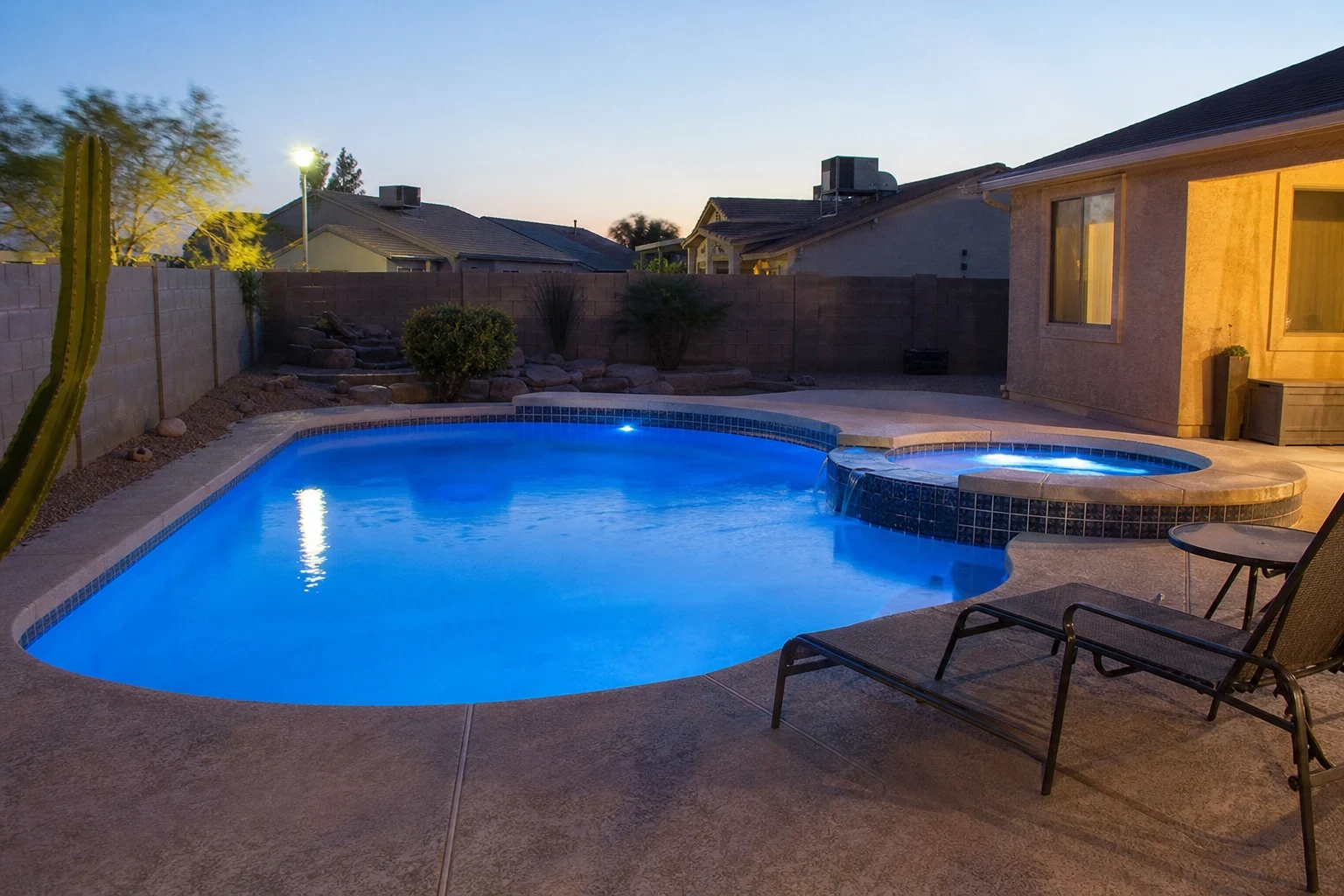
Ready for fresh water?
Tell us about your pool and when it was last drained. We'll talk through whether it needs a full drain, a partial one or nothing yet.